
Understanding Antistatic Polyethylene Bag Technology and Static Control in Packaging – Part 1
Static electricity is an invisible but critical hazard in industries dealing with powders, chemicals, pharmaceuticals, and sensitive electronic components. During material handling, filling, or transportation, uncontrolled static charge buildup can lead to serious safety and quality issues such as:
• Dust attraction and contamination
• Powder sticking and material loss
• Spark generation and fire risk
• Damage to electronic components (ESD)
• Clean room non-compliance
Conventional polyethylene (PE) bags are highly insulative and easily accumulate static charges. To overcome these limitations, Antistatic Polyethylene (PE) Bags are specially engineered to control, dissipate, and neutralize static electricity, ensuring safe and compliant packaging.
1. What Are Antistatic Polyethylene Bags?
Antistatic PE bags are manufactured using LDPE / LLDPE / HDPE resins, combined with carefully selected antistatic additives that alter the electrical behavior of the film surface.
Unlike normal PE bags, antistatic bags:
• Minimize static charge generation
• Prevent charge accumulation
• Allow slow, controlled dissipation of electricity
Surface Resistivity Comparison
| Bag Type | Surface Resistivity (Ω/□) | Static Behavior |
| Normal PE Bag | 10¹² – 10¹⁶ | High static buildup |
| Antistatic PE Bag | 10⁹ – 10¹¹ | Static-dissipative |
This controlled resistivity range makes antistatic PE bags suitable for regulated and safety-critical environments.
2. Why Static Electricity Is a Serious Problem in PE Packaging
Polyethylene is an electrical insulator. When subjected to friction, folding, vibration, or powder flow, triboelectric charging occurs.
Major Problems Caused by Static
• Dust and airborne particle attraction
• Powder sticking to inner bag walls
• Filling and discharge difficulties
• Spark formation during filling
• Explosion risk with flammable powders
• ESD damage to electronic components
In pharmaceutical clean rooms, static also attracts microbial contaminants, directly affecting product quality and regulatory compliance.
3. How Antistatic Polyethylene Bags Are Manufactured
Antistatic performance is achieved using two main manufacturing approaches:
Manufacturing Method Comparison
| Method | Description | Performance | Typical Use |
| Internal Antistatic Master batch | Additive mixed during extrusion | Long-lasting & stable | Pharma, electronics, chemicals |
| Topical Antistatic Coating | Applied after extrusion | Temporary effect | Short-term, low-risk use |
For regulated industries, internal antistatic masterbatch technology is the preferred and reliable solution.
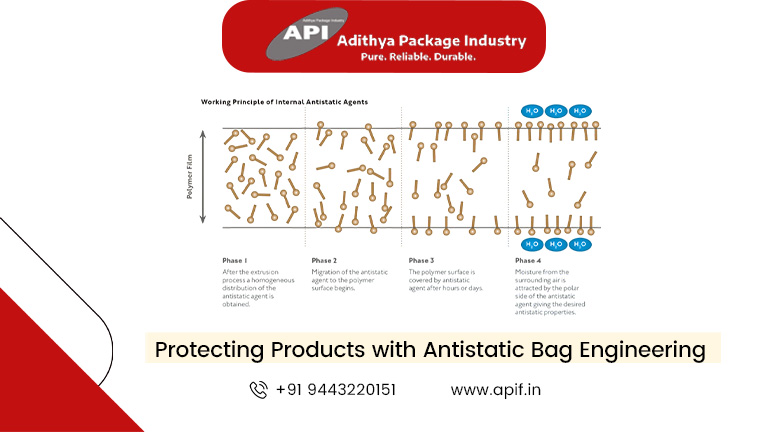
4. Science behind Antistatic Additives
Common antistatic additives include hygroscopic compounds such as:
• Quaternary ammonium compounds
• Ethoxylated amines
• Glycerol and sorbitan esters
These additives are designed to safely modify surface conductivity without compromising film strength or cleanliness.
In the Next Part, We Will Be Covering the Following:
• How Antistatic Additives Work – the science behind controlled static dissipation
• Testing of Antistatic Polyethylene Bags – standards, methods, and acceptance criteria
• Advantages of Antistatic PE Bags – safety, handling, and performance benefits
• Industrial Applications – pharmaceutical, chemical, electronics, food, and cosmetic uses
• Antistatic vs. Normal PE Bags – Selection Guide – choosing the right packaging solution
Conclusion
Antistatic Polyethylene Bags are not optional upgrades—they are essential safety packaging solutions. They ensure protection, cleanliness, efficiency, and regulatory compliance wherever static electricity poses a risk.
With advanced polymer science, precision manufacturing, and strict quality control, Adithya Package Industry delivers reliable, high-performance antistatic PE bags tailored to customer and industry requirements.