In many industries today — particularly pharmaceutical, electronics, chemical, and defense — static electricity can cause serious damage to sensitive products. When packaging materials or powders rub against one another, they can generate static charges. These invisible charges may not seem harmful but can ignite flammable materials, damage electronic components, or attract dust and contamination. This is where Anti-Static Bags play a crucial role, especially for industries operating across regions like Karnataka, Kerala, Tamilnadu, Andhra Pradesh, and Pondicherry, where demand for specialized packaging is growing.
What Are Anti-Static Bags?
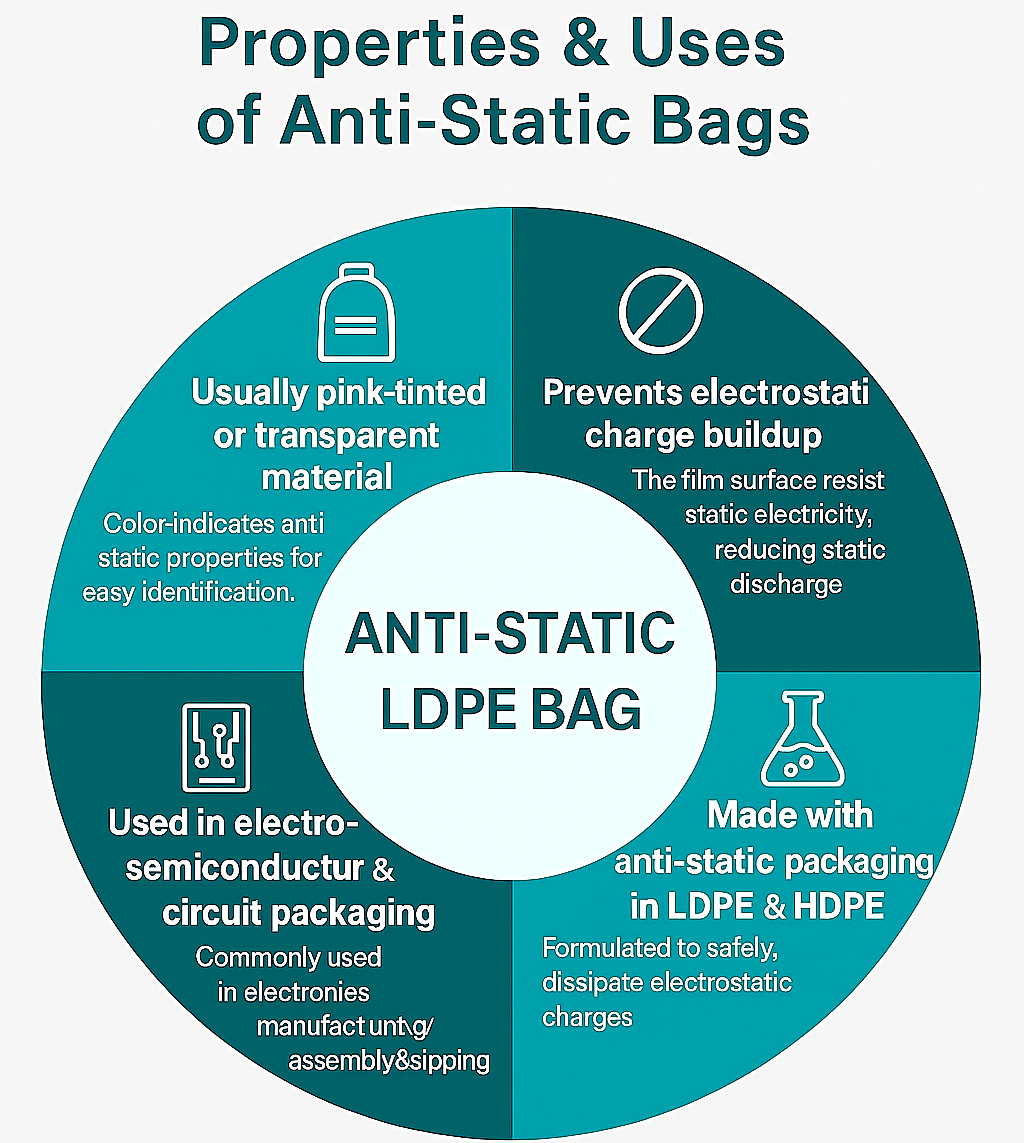
Anti-Static Bags are specialized packaging materials designed to prevent or dissipate static electricity. They are made from LDPE or HDPE films treated with anti-static additives that reduce surface resistance. The result: the surface of the bag will not accumulate static charge, keeping the contents safe from electrostatic discharge (ESD). Products such as Anti static bag Karnataka, Anti static bag Kerala, and Anti static bag Tamilnadu are widely used in industries requiring ESD-safe packaging.
What Are Non Anti-Static Bags?
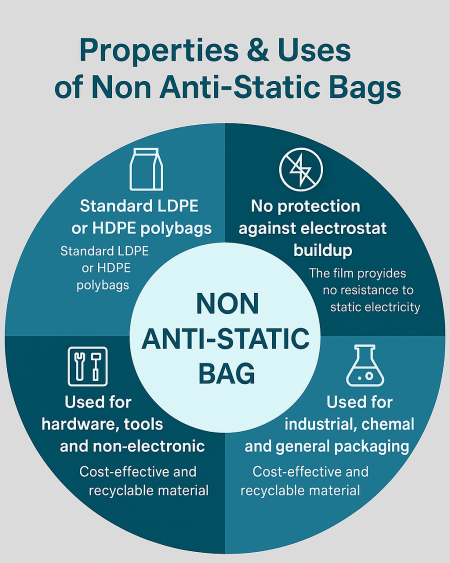
Non-Anti-Static Bags (or regular plastic bags) are standard LDPE or HDPE bags without anti-static treatment. They are suitable for non-sensitive materials where static electricity poses no risk. These are the most common bags used for general packaging, bulk storage, and export shipments where ESD protection is not needed.
Key Differences between Anti-Static and Non Anti-Static Bags
Property
Anti-Static Bags
Non Anti-Static Bags
Material Type
LDPE/HDPE with anti-static additive
Regular LDPE/HDPE
Surface Resistance
10⁹–10¹¹ ohms (prevents charge build-up)
10¹² ohms or higher (charge can accumulate)
Static Charge Dissipation
Rapid (within milliseconds)
Very slow or none
Dust Attraction
Minimal
High (due to charge build-up)
Safety in Sensitive Areas
Excellent
Not suitable
Cost
Slightly higher
Standard pricing
Where Are Anti-Static Bags Used?
General industrial and commercial packaging
Food and feed packaging
Non-flammable powder or granule storage
Shipping and export of inert materials
Low-cost bulk packaging
Where Are Non Anti-Static Bags Used?
Requirement
Recommended Type
Handling of sensitive powders or electronic items
Anti-Static Bag
Regular bulk or export packaging
Non Anti-Static Bag
Flammable or dust-sensitive environments
Anti-Static Bag
Standard commodity packaging
Non Anti-Static Bag
Whether your requirement is for Anti static bag Karnataka, Anti static bag Kerala, Anti static bag Tamilnadu, Anti static bag Andhra Pradesh, or Anti static bag Pondicherry, choosing the right type ensures product safety and compliance.
Conclusion
Static electricity may be invisible, but its impact can be costly. By choosing the right packaging — Anti-Static for safety-critical materials or Non Anti-Static for general use — you can ensure product integrity and industry compliance.
Adithya Package Industry provides both types, fully tested, certified, and customized to your needs — ensuring safety, reliability, and performance every time.