
Introduction
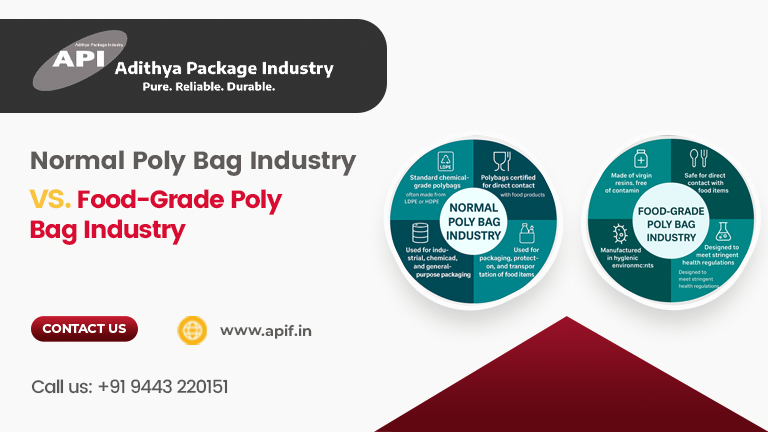
Poly bags are one of the most widely used packaging materials across all industries. From hardware to pharmaceuticals, every sector depends on polyethylene (LDPE / HDPE) films for product safety and cost-effective packing. However, not all poly bags are the same. The bags used for food and pharmaceutical products must meet stricter standards — both in raw material purity and in manufacturing hygiene — compared to normal industrial bags. This blog explains the key differences between the normal poly bag industry and the food-grade poly bag industry, and why choosing the right type matters for product safety and compliance.
1. Raw Material Quality
| Aspect | Normal Poly Bag Industry | Food-Grade Poly Bag Industry |
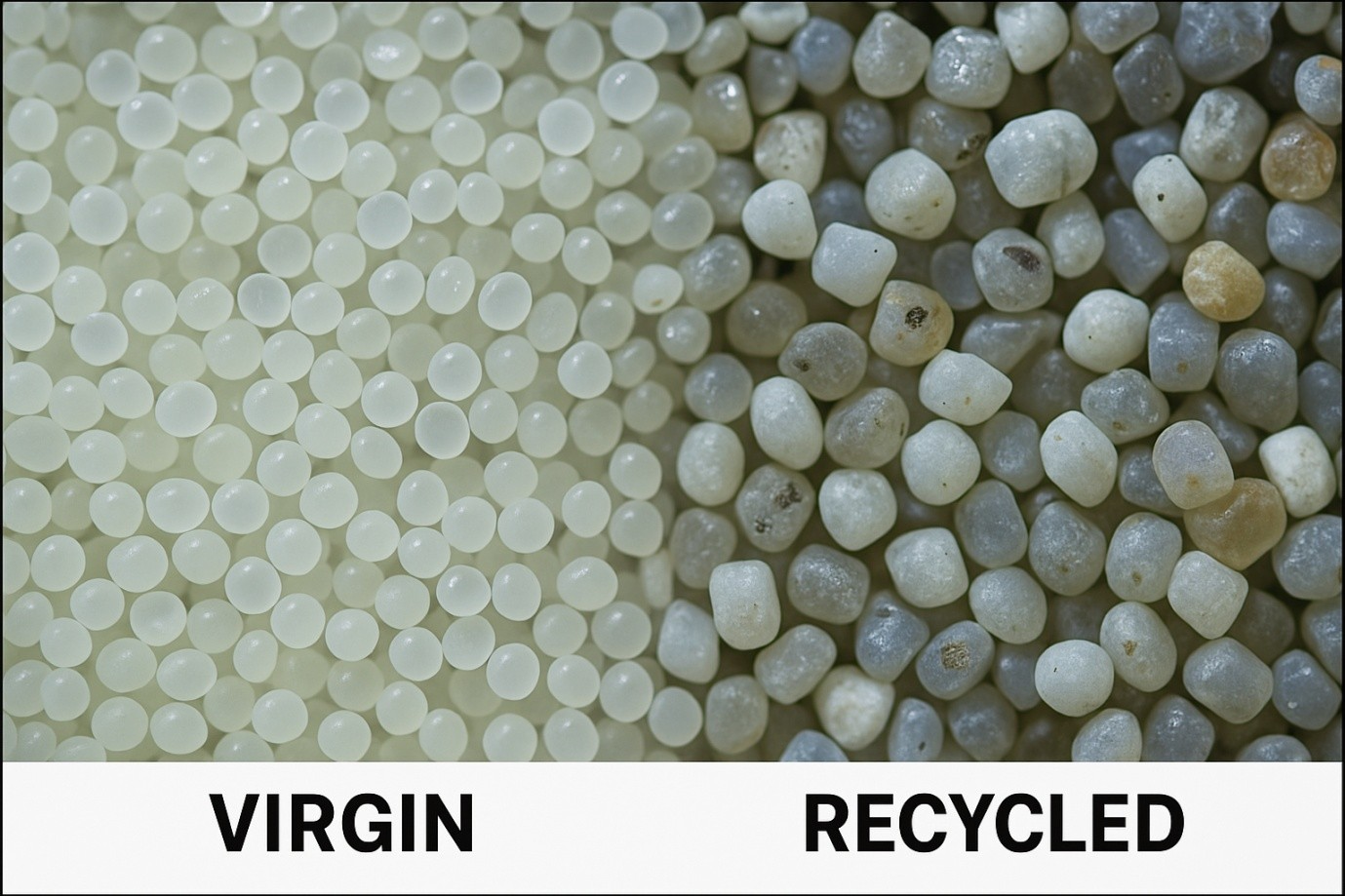
| Material Type | Mixed or recycled LDPE/HDPE may be used | 100% Virgin LDPE / LLDPE / HDPE only |
| Additives | May contain colorants or fillers | Only food-safe additives (FDA / EU compliant) |
| Purity Level | Moderate | High purity — no odor, no contamination |
| Recyclability | Yes, but not suitable for direct food contact | Yes, safe and recyclable for food applications |
In food-grade packaging, even minor contamination can affect product safety or shelf life. Hence, virgin-grade polymers are mandatory.
2. Manufacturing Environment
| Aspect | Normal Poly Bag Plants | Food-Grade Poly Bag Plants |
| Production Area | General industrial setup | Controlled clean room or hygienic zone |
| Air Filtration & Dust Control | Not mandatory | Mandatory HEPA / filtered air systems |
| Handling Standards | Manual handling acceptable | Strict hygiene, no direct human contact with film |
| Operator Safety Gear | Optional | Compulsory: gloves, caps, and gowns |
| Quality Testing | Basic inspection | Microbial, moisture, and contamination testing |
3. Regulatory and Certification Requirements
| Parameter | Normal Bags | Food-Grade Bags |
| FDA Compliance | Not required | Mandatory for food contact |
| EU 10/2011 Regulation | Not applicable | Required for European exports |
| Migration Testing | Not required | Tested for chemical leaching |
| ISO Standards | Optional | ISO 9001:2015 / ISO 22000 recommended |
| Traceability | Not needed | Batch-wise traceability required |
4. Typical End-Use Sectors
| Industry Type | Normal Poly Bag | Food-Grade Poly Bag |
| Industrial Chemicals |
✔ |
– |
| Textiles / Hardware / Components |
✔ |
– |
| Fertilizer / Cement / Metal Parts |
✔ |
– |
| Pharmaceutical / Nutraceutical Powders |
– |
✔ |
| Food / Spices / Dry Fruits / Dairy |
– |
✔ |
| Cosmetics / Healthcare |
– |
✔ |
5. Environmental Impact and EPR
Both categories of bags can be manufactured under EPR (Extended Producer Responsibility) compliance. However, food-grade plants typically follow stricter segregation and recycling traceability, ensuring safe disposal of waste and reuse of clean scrap.
6. Cost vs. Value
| Aspect | Normal Bags | Food-Grade Bags |
| Cost per Kg | Lower (due to recycled or mixed polymer) | Slightly higher (pure virgin polymer and testing) |
| Durability | Good for general use | Superior barrier and sealing performance |
| Customer Segment | Industrial / bulk exporters | Food, pharma, and healthcare brands |
7. Conclusion
The difference between normal and food-grade poly bags lies in purity, process, and purpose. If your product comes in direct contact with the packaging, always choose Food-Grade Bags to protect consumer health and comply with regulatory norms.
At Adithya Package Industry , we operate both Normal Poly Bag and Food-Grade Poly Bag production lines, offering customers complete flexibility.
- 100% Virgin Material (for food grade)
- Separate extrusion & packing areas to prevent cross-contamination
- FDA / EU compliant food-contact films
- EPR Certified sustainable operations
- Micron consistency, seal strength, and visual clarity ensured in every batch